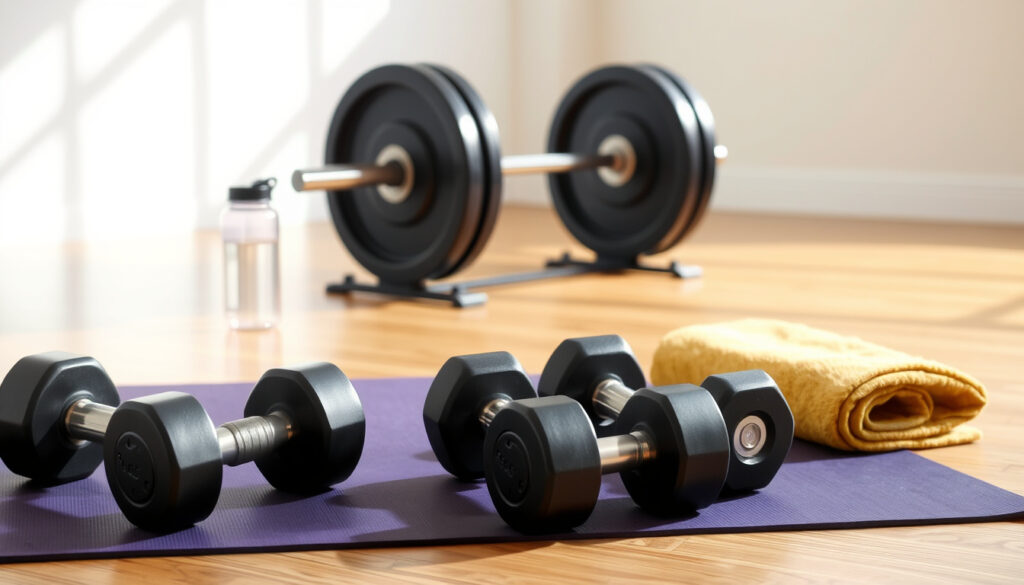
Full Body Workout Guide: Best Exercises & Tips
Anyone who has tried to piece together a workout from memory knows the feeling of finishing a session and wondering, “Did I miss something?” That’s the problem a well-designed full body workout solves. It’s a pragmatic approach that gives you the most return on your time in the gym, whether you have 30 minutes or an hour.
Exercises typically included in a full-body workout: 4–6 ·
Recommended frequency per week for beginners: 2–3 days ·
Minimum sets per exercise for muscle growth: 3–4 ·
Rest time between sets for strength: 2–3 minutes
Quick snapshot
- Full-body workouts are effective for beginners and intermediates (NHS strength exercise guidance).
- Resistance training at least 2 days per week is recommended by the U.S. Department of Health and Human Services (official guidelines).
- Compound movements are time-efficient for building strength and muscle. (strength exercise guidance)
- The exact optimal set volume per muscle group per week is still debated, though 10–20 sets is a common recommendation.
- The 3-3-3 rule is a mnemonic, not a scientific prescription.
- Muscle soreness is not a direct indicator of muscle growth.
- Muscle growth from a new program typically becomes noticeable after 6–8 weeks of consistent training.
- Strength gains can appear sooner, within 2–4 weeks, due to neural adaptations.
- Progress by adding resistance or repetitions every 2–4 weeks to continue challenging muscles.
- Expect to adjust the routine after about 12 weeks to keep progress steady.
| Aspect | Recommendation |
|---|---|
| Common exercises in a full-body routine | 4–6 |
| Recommended weekly frequency | 2–3 days |
| Sets per exercise (typical) | 3–4 |
| Rest between sets | 2–3 minutes |
| Key movement patterns | Squat, hinge, push, pull, carry |
What is the best full-body workout?
The best full-body workout is not a single magic list of exercises. It’s a framework that checks a few boxes. According to NHS strength exercise guidance, a full-body routine typically includes 4-6 exercises that cover squat, hinge, push, pull, and core movement patterns. This approach ensures you’re not just hitting the mirror muscles but building balanced, functional strength.
Core movement patterns for a full-body routine
The foundation of any good full-body plan lies in its exercise selection. Compound movements like squats, deadlifts, rows, and presses are the foundational exercises because they work multiple muscle groups at once, making them incredibly time-efficient. A balanced routine includes a squat pattern (goblet or barbell squat), a hinge pattern (deadlift or Romanian deadlift), a push (bench press or push-up), a pull (rows or lat pulldown), and a core element (plank or farmer’s carry). A typical full-body workout consists of these movement patterns, not just isolated exercises.
The beginner who follows a program built on compound movements gets more muscle activation per minute than someone doing isolated machine work, which is exactly what makes this routine efficient.
How to structure sets and reps
Once you’ve selected your exercises, structure matters. A common approach for beginners is 3–4 sets of 8–12 repetitions for each exercise, with 2–3 minutes of rest between sets. This volume is backed by the recommendation to aim for 3–4 sets per exercise for muscle growth. For those starting out, training to failure or near-failure on the last set of each exercise can ensure you’re working hard enough, but it’s not a requirement. The cognitive load of figuring out a split is eliminated; you simply rotate through the movements each session.
Beginner vs. advanced programming
Most full-body programs are designed for beginners and intermediates. For a beginner, a routine focused on learning the movement patterns with light weight or just the barbell is key. For an intermediate, adding weight and manipulating variables like sets and reps becomes the focus. The Workout Mag, a fitness resource, anbefaler å trene 3 dager i uken med minst én full hviledag mellom øktene for nybegynnere.
The implication is clear: the “best” workout is the one you can perform consistently with correct form and progressive overload. The structure is a template, not a cage.
What is the 3-3-3 rule for workout?
You’ve probably seen the 3-3-3 rule floating around on social media. It’s a catchy mnemonic, not a scientific principle, but it can be a useful mental model. The rule can refer to three key exercises, three sets each, and three days a week. It can also mean three minutes of cardio, three strength moves, and three times a week, depending on the source, according to Daily Burn’s beginner workout plan. The exact meaning varies.
Origins and interpretation
The 3-3-3 rule is less about a specific study and more about simplifying programming. For a beginner, it neatly packages the three most important variables: frequency (3 times a week), duration (3 exercises is possible, but 3 sets of 3 exercises is a common strength scheme), and volume. In practice, you might do 3 sets of 3 big lifts (squat, bench, row) three times a week. For many, it’s an acceptable starting point that ensures you’re doing the most fundamental work without overcomplicating things.
How to apply the 3-3-3 rule to your routine
Applying the 3-3-3 rule to your full-body workout is about simplifying the mental load. Instead of wondering if you’re doing enough, you pick three exercises, do three working sets of each, and stick to that three days a week. An example routine could be: Goblet Squats (3×8-12), Push-ups (3x max), and Bent-Over Rows (3×10-15). This approach ensures you hit the lower body, a push, and a pull, which covers the basics. It’s a stepping stone to a more complex plan and a good way to build a consistent habit.
The catch? The 3-3-3 rule is a starting point. What’s more important than the specific rule is that you’re consistent and you’re gradually increasing the challenge. For the beginner, the mnemonic is a bridge to more advanced programming.
What are the 10 best full-body exercises?
When asked for the “10 best full-body exercises,” the answer isn’t a random list of moves; it’s a selection of patterns that hit the most muscle groups with the least amount of work. These are the exercises you should learn and master because they form the backbone of any solid program. Full-body exercise lists published by organizations like BetterMe often include variations like bodyweight squats, incline push-ups, glute bridges, and planks for home workouts.
Squat variations
Squats are the king of lower-body exercises. They target your quads, glutes, and core. For a full-body routine at home, a bodyweight squat or goblet squat is your best friend. The BetterMe no-equipment plan anbefaler å inkludere øvelser som kroppsvektknebøy. If you have access to a gym, a barbell back squat is a more advanced variation that allows for progressive overload.
Hinge patterns
A hip hinge (deadlift, Romanian deadlift, or kettlebell swing) is crucial for your posterior chain—the muscles in your back, glutes, and hamstrings. This movement is about pushing your hips back, keeping a flat back, and returning to standing. It’s a fundamental human movement pattern that, when done right, builds serious strength. The BetterMe comprehensive review describes a straight-leg hip hinge with a neutral spine and a slight knee bend.
Push and pull variations
These are your upper-body strength builders. For pushing, you have horizontal pushes (bench press, push-ups) and vertical pushes (overhead press). For pulling, you have horizontal pulls (rows) and vertical pulls (pull-ups, lat pulldowns). You don’t need all of them in one day, but you need at least one push and one pull. For beginners, incline push-ups are a great starting place, and rows can be done with a resistance band or a table edge.
Core and carry exercises
Core work isn’t just about doing a hundred crunches. It’s about bracing and resisting movement. Exercises like planks, dead bugs, and farmer’s walks hit the core differently. The NHS includes core exercises like the plank in its strength guidelines. Carries, especially, teach you to stay stable and strong while moving, which translates to real-world strength.
Is 7 exercises enough for full-body?
Yes, for most people, 7 exercises is plenty for a full-body workout. It aligns well with the common 4-6 exercise recommendation for full-body routines. When you focus on compound movements, you’re not just doing one muscle at a time; you’re challenging your entire body with each set. A 7-exercise routine allows you to cover all the major movement patterns—squat, hinge, push, pull, and core—and leave time for the main lifts.
Volume considerations
The real question isn’t whether 7 exercises is “enough” but whether the total volume is adequate for your goals. For a beginner, 7 exercises at 3-4 sets each equals about 21-28 working sets per session. This volume is within the recommended weekly range for muscle growth, which is often cited as 10-20 sets per muscle group per week. If those sets are spread across the week, it’s manageable. For someone doing full-body three times a week, this means the total volume is well-distributed.
When 7 exercises may be appropriate
If you’re training 2–3 times a week, 7 exercises per session is a robust number. It allows for enough variety to keep the stimulus fresh and target the major muscle groups from multiple angles. The trick is to manage intensity. If you’re handling the load well and progressing, you’re on the right track. For a busy professional, this approach is perfect. It’s a complete session in under 60 minutes.
Signs you need more or less volume
If you’re constantly sore after a week, you might be doing too much. Conversely, if you never feel any soreness and your weight isn’t increasing, you might need to add a set or an exercise. The optimal volume is personal. Seven exercises might be too much for a beginner just starting out, but it’s a great middle ground for most. The sign that it’s working is steady progress—either you’re getting stronger, your body composition is changing, or you feel better overall.
Is full body 3 times a week too much?
For most people, training full body three times a week is not too much—it’s actually the sweet spot for balancing stimulus with recovery. The NHS exercise guidance recommends adults do strengthening activities on at least two days a week. For full-body routines, three non-consecutive days is a common and effective frequency. This schedule gives you 48 hours of recovery between sessions, which is key for muscle repair.
Recovery and frequency
The better approach is to schedule your full-body workouts on non-consecutive days, such as Monday, Wednesday, and Friday. This ensures you’re not training the same muscle groups with less than 48 hours of recovery. During resistance training, you break down muscle fibers, and the rebuild happens during rest. If you train too frequently, you risk overtraining, which can lead to injury and hinder your progress. A 3x per week plan is a goldilocks frequency for the general population.
Beginner and intermediate considerations
For a beginner, 3 days a week is the maximum you need to see results. The The Workout Mag anbefaler å trene 3 dager per uke med minst én full hviledag mellom øktene. For an intermediate, it’s a solid frequency that allows you to maintain a “personal record” mindset on each lift. If you’re an advanced lifter, you might need more frequency to accumulate volume, but that’s often split into specialized routines.
How to schedule 3 full-body sessions
A simple schedule is Monday, Wednesday, and Friday. This gives you a pattern that prioritizes consistency. You can also do Tuesday, Thursday, and Saturday. The key is to avoid training the same muscle group hard on back-to-back days. The journal of strength and conditioning research suggests that if you train a muscle group three times a week, you should allow for 48 hours of rest between sessions.
What kills muscle gains the most?
It’s the boring answer: inconsistency and poor recovery. You can do the perfect workout, but if you don’t sleep well, don’t eat enough, and are constantly stressed, you’re sabotaging your own progress. There are several factors that prevent muscle growth, but three stand out because they’re so common.
Inconsistent training
The biggest killer is missing sessions. One great workout isn’t what builds muscle; it’s the accumulation of consistent training over months. If you’re training full-body three days a week, a missed Monday can throw off the entire week, turning a 3-session week into a 2-session week. This inconsistency means you’re not providing the stimulus needed for growth. The 3-3-3 rule is a way to fight this by building a simple, repeatable habit, but you still have to show up.
Poor sleep and nutrition
Muscle growth is a recovery sport. Resistance training breaks down muscle fibers, and the rebuilding happens when you rest and eat. If you’re not getting 7-9 hours of sleep, your body doesn’t have enough time to repair, and your hormones, like testosterone and growth hormone, aren’t optimal. Similarly, if you’re not eating enough calories and protein, you don’t have the building blocks for repair. According to NHS nutrition guidelines, you need to fuel your body for the work you’re doing.
Overtraining and lack of recovery
While it might be tempting to push yourself hard, doing too much without enough rest is a mistake. Overtraining can lead to a plateau or even a loss of strength. It’s not just about training volume; it’s about recovery. Signs of overtraining include persistent fatigue, difficulty sleeping, and a decrease in performance. The American College of Sports Medicine stresses that adequate recovery is essential for results.
The pattern is clear: the most common mistakes are under-recovery and under-consistency. It’s not about doing more; it’s about doing the right things often enough, and resting enough to let your body adapt. For the average person, the problem isn’t the workout plan—it’s the person failing to stick to it.
What age is hardest to gain muscle?
The short answer is that it gets harder as you age, but it’s not impossible. The “hardest age” isn’t a universal truth; it’s about biological changes that begin in your 30s. The good news is that a full-body workout is often the best defense against age-related muscle loss. The key is to be aware of these changes and adapt your training accordingly.
Age-related muscle loss (sarcopenia)
Muscle mass and strength gradually decline with age after the 30s, a process known as sarcopenia. This isn’t just a cosmetic issue; it leads to a loss of function and an increased risk of falls. However, this process is not strictly predetermined. Strength training can push back on this timeline. The NHS addresses this directly, noting that you can start at any age, and it’s gaining muscle that will help you live better for longer.
Hormonal changes
Hormonal changes play a significant role. In men, testosterone levels, which are crucial for muscle growth, start to decline gradually after their 30s. For women, the drop in estrogen around menopause can accelerate muscle loss. These changes mean that as you get older, you have a smaller “window” for muscle growth, and your recovery might be slower. This makes the principles of progressive overload and adequate rest even more critical.
Training and nutrition across decades
This doesn’t mean that gains are impossible—far from it. It just means you have to be smarter. For someone over 40, a full-body routine with an emphasis on compound movements is efficient. You need to be more careful with your joints but also recognize that the stimulus of lifting weights is what signals your body to preserve muscle. The The Workout Mag emphasizes that strength training is for everyone, and their plans include modifications for all levels.
What is a well-rounded full-body workout?
A well-rounded full-body workout addresses your strength, endurance, and mobility. It’s the kind of program that leaves you feeling like a complete athlete, not just a body part. It’s a program that checks all the boxes. The plan should be built on a strong foundation, covering the bases. A well-rounded full-body routine is one that includes a mix of compound and isolation exercises to target every muscle group and movement pattern.
Strength
Strength work is the core of any good full-body plan. This involves lifting heavy weights for lower reps (5-8). A program focused on strength will have you doing compound exercises like squats, deadlifts, and rows. The goal is to improve the force your muscles can produce. The American College of Sports Medicine recommends focusing on progressive overload to get stronger. This is where you lift more weight or do more reps over time.
Endurance
Muscular endurance is your ability to perform repeated contractions over a longer period. This is where you’ll find higher repetitions (15-20) with lighter weights. A well-conditioned individual can do many push-ups (a form of full body workout without equipment) or carry a heavy bag without fatigue. Including exercises like kettlebell swings or high-rep push-ups can build this base. For an athlete, this is crucial for the fourth quarter. For the average person, it makes everyday tasks easier.
Mobility
It’s not just about moving weight; it’s about moving well. Mobility work focuses on moving through a full range of motion and maintaining joint health. This includes exercises like deep bodyweight squats, shoulder openers, and hip flexor stretches. These movements prep you for the strenuous part of your workout. For a full-body home workout, this is often the difference between a productive session and an injury. Incorporating dynamic stretches and low-load exercises as a warm-up is a great start.
A well-rounded program isn’t just about adding more exercises. The trap is sacrificing form to do a little of everything. It’s a matter of planning, not just piling on volume.
What is the best full-body workout for weight loss?
The best full-body workout for weight loss is the one that increases your heart rate and burns calories while also building lean muscle. It’s often a matter of intensity and not just exercise selection. To lose weight, you need to be in a calorie deficit, and adding a strength training routine can help you maintain muscle mass while you do it. The key is to train with a degree of effort that pushes your body to adapt.
Compound moves for metabolic cost
Compound moves are your best friend here because they burn more calories and elevate your heart rate more than isolation exercises. A squat isn’t just for your legs; it’s a massive total-body movement that improves your anaerobic capacity. By combining it into a circuit, you can turn your strength workout into a metabolic workout. There’s a reason why a Daily Burn beginner plan features these exercises so prominently.
Circuit vs. straight sets
How you structure your workout matters for weight loss. A circuit (moving from one exercise to the next with little or no rest) keeps your heart rate high and burns more calories per minute. The scientific literature shows both are effective for weight loss, but circuits are more time-efficient. A beginner can use circuits to do “full body workout without weights” effectively. The goal is to increase your work output and elevate your heart rate.
Cardio fusion
You don’t have to separate weights from cardio. A fast-paced full-body routine is a form of concurrent strength and conditioning. This fuses the best of both worlds. In fact, it’s a great way to do full body workouts for busy people. You don’t need to run a mile and then lift. You can do a farmer’s carry that doubles as a cardio session and a core exercise. This approach is more efficient and more fun.
What is a beginner full body workout routine at home without equipment?
A beginner full body workout routine at home without equipment is the best entry point for many people. It’s exactly what it sounds like: a structured plan that you can do from your living room. That said, the core is the same for most routines. The focus is on learning the patterns. There are full body workout at home plans that use your body weight to create a stimulus, which is challenging enough at first. You just have to know what you’re looking for.
Warm-up
It’s always important to warm up, regardless of where you’re training. A brief warm-up gets the blood flowing, raises your body temperature, and improves your range of motion. This is the time to do a few minutes of marching in place or dynamic movements like leg swings. It’s not just about preparedness; it’s about preventing injury. The goal for a beginner is to prepare the body for the upcoming work ahead.
The routine
A simple beginner routine would finish with a few rounds of a circuit. An example is a circuit of 4 rounds of 10 reps each of bodyweight squats, incline push-ups, walking lunges, and a 30-second plank. There is no equipment needed because these movements use your bodyweight and natural movements. The routine is an effective way to start with a time-efficient, full body workout no equipment. You can talk to an expert, but you don’t need to. You don’t need to go to the gym to work out every day.
Cool-down
Cooling down is more than just a quick stretch. It’s your body’s way of easing back to a resting state. The focus is on bringing the heart rate down, which is a sign of a good full body workout. Spend 5-10 minutes stretching your quads, hamstrings, and chest. This isn’t the time to do a full body yoga session; it’s about a few static holds.
The plan works best if you can do it 3 times a week, but if you are a true beginner, doing it twice a week with a day in between is sufficient to see some beginner’s gains. The recovery is just as important as the workout.
medium.com, dailyburn.com, loadmuscle.com, plr.cht.nhs.uk, note.com, your-pt.com, acsm.org, nhs.uk, keedia.com
FAQ
How often should I change my full-body workout routine?
It’s a common belief that you need a new routine every 4-6 weeks to keep your body guessing. However, this isn’t necessary for beginners. Progressive overload is the key, not constant variation. You should keep the same exercises and only change the variables—sets, reps, and rest—when you stop progressing.
Can I do a full-body workout with bodyweight only?
Yes, you can get an excellent full-body workout with bodyweight only. Many people who have mastered full body workout at home use only their body weight. Exercises like squats, push-ups, and planks hit the main movement patterns. For more intensity, focus on tempo, pauses, or single-leg variations. It’s a great way to build a full body workout for beginners at home.
How long should a full-body workout last?
A full-body workout can last between 30 to 60 minutes. The exact length depends on your structure. A session that includes 6 exercises with 3 sets each, for instance, will take longer than a routine with only 3 exercises. If you’re tight on time, you can always do a full body workout 20 minutes a day, which is still enough to get a good stimulus, especially if you do exercises like push-ups and squats.
Do I need to do cardio on full-body workout days?
It depends on your goals. If you’re a beginner, doing just the resistance training is often enough of a challenge. Once you can complete the routine with good form, you can add short bursts of cardio afterwards. However, since you’re already doing a full body workout, adding too much too soon can interfere with recovery. It’s about managing intensity. A brisk walk is a good place to start.
What should I eat before and after a full-body workout?
Nutrition is a key part of your overall strategy. Before a workout, have a light carbohydrate-based snack, such as a banana, about 30-60 minutes prior. After your workout, focus on a combination of protein and carbohydrates to help with recovery. This helps refill your energy stores and gives your body the building blocks it needs to rebuild muscle tissue.
Will full-body workouts help me burn belly fat?
Yes. While you can’t spot-reduce belly fat, a comprehensive full-body workout is one of the best ways to burn it overall. Full-body workouts build lean muscle, which increases your metabolic rate, helping you burn more calories all day. This effectively helps to reduce overall body fat, which in turn helps reduce belly fat, often cited as a classic way to get ripping abs.
Flere relaterte innlegg
 Hva er kolesterol? Symptomer, årsaker og behandling
 Morten Borg barn: Alt om faren til Marius Borg Høiby
 Newcastle United FC mot Arsenal FC oppstilling – Arsenal 1-0
 Kristoffer Ingebrigtsen alder – Hvor gammel er han
 Pasta Bolognese Oppskrift – Slik lager du den autentiske sausen
 Uke 27 2026 – datoer og helligdager
 De beste restauranter i Oslo: Kule og billige
 Nummen i fingrene: vanlige årsaker, symptomer og øvelser